
Business internet for cafés and restaurants
The till, the delivery tablets and the guests all want the same connection at exactly the same hour, and only one of those three can be allowed to slow down.
- 1:1 uncontendedThe bandwidth is yours
- SymmetricUpload matches download
- 99.5% uptime SLAWith a 4 hr fault response target
- Surveyed per siteA free survey, then a written quote
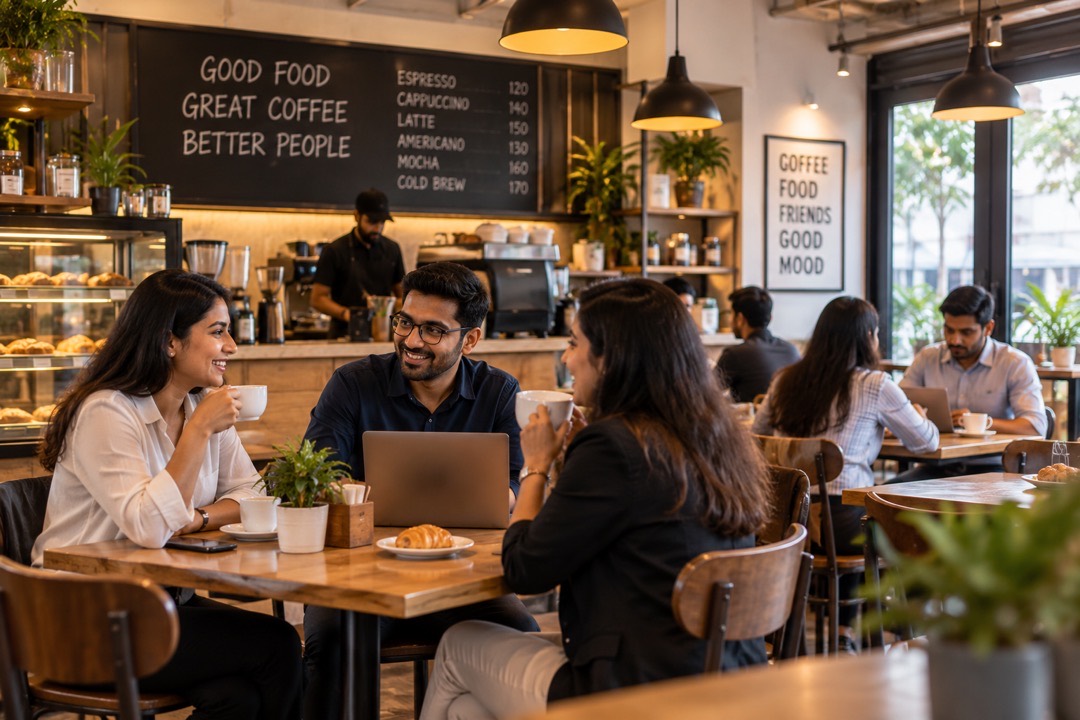
What goes wrong during a rush
Six things operators tell us, all of them between twelve and two or seven and ten.
Two service windows carry most of the revenue, and a contended line is at its worst in exactly those hours.
Swiggy and Zomato orders arrive on somebody else's clock. A slow tablet is a late order and a rating you keep.
In a café especially, guests sit for hours on it, and that traffic should never reach the till.
A failed payment at the end of a meal is the worst possible moment for it to happen.
Billing, KOT, inventory and reservations are all hosted elsewhere, so the connection is the kitchen's dependency too.
At 8pm the manager is running a floor, not diagnosing a router.
Sized against the service window
What each requirement turns into once it is surveyed.
| What the plant needs | What we put behind it |
|---|---|
| Billing and KOT that never wait | The till, kitchen displays and aggregator tablets on their own network, ahead of everything a guest is doing. |
| Guest wifi that does not cost you the till | Separate guest network over the same circuit, with its own share and no route to the billing system. |
| Payments at the table | A 1:1 uncontended circuit with a 99.5% uptime SLA in writing and a 4 hr fault response target. |
| Two hours you cannot lose | A second path on a different route, because a rush does not come back later in the evening. |
| More than one outlet | Every location on one network, one bill and one support contact. |
Counter, kitchen and guests on one network
What sits in the outlet, what it has to reach, and our network in between.
- Counter and till
- Kitchen displays
- Guest wifi
 Business network
- Delivery aggregators
- Cloud billing and stock
- Card and UPI
Multiple possibilities
- Till and kitchen ahead of guest traffic
- Guest devices with no route to the billing system
- A second path where a rush cannot be lost
- 24×7 NOC monitoring on the link
Four ways to connect an outlet
A single outlet is business broadband territory. The separation and the backup path are what make it a business product.
Symmetric fiber sized for a working day rather than an evening of streaming.
Learn moreWe run the link, watch it from the NOC and answer for it when it breaks.
Learn moreA second path, so one cut cable is not the end of the day.
Learn moreA fixed address, for anything that has to be reachable from outside.
Learn moreOrganisations already on our network
91 businesses and institutions across Maharashtra run on Gazon connectivity, grouped here the way our own capability deck groups them.







































































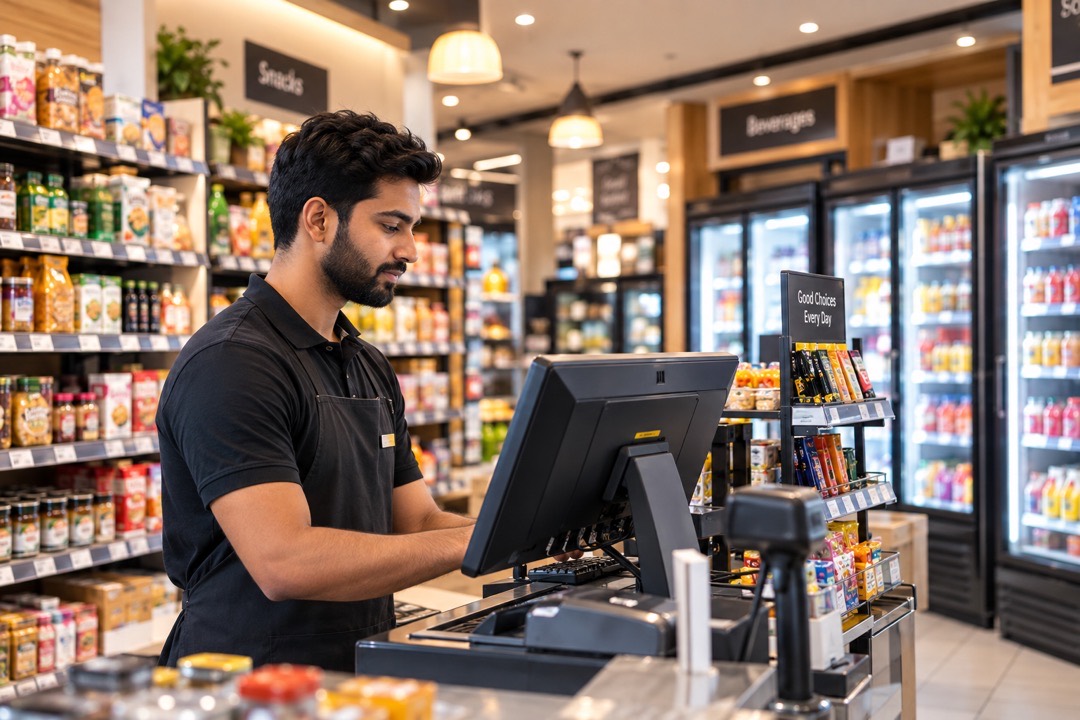
What an outlet’s line carries at seven
Eight things competing for the same two hours.
Counter to kitchen, every order.
Orders on somebody else's clock.
At the end of every table.
Stock counted down as it is sold.
Guests who stay for hours, kept off the till.
Kitchen, counter and floor, all shift.
Busiest exactly when you are.
Background traffic that should stay in the background.
From enquiry to a running line
Four steps, and what each one settles.
- 01Tell us the siteThe address, what the connection has to carry, and whether there is more than one location.
- 02We survey the addressHow far our fiber is from your door, and what the route to it involves. Free, and no obligation.
- 03A written quotePriced against that route rather than against an average, with the lead time and the SLA on it.
- 04Install, test, monitorWe build it, test end to end, and the link joins the 24×7 NOC.